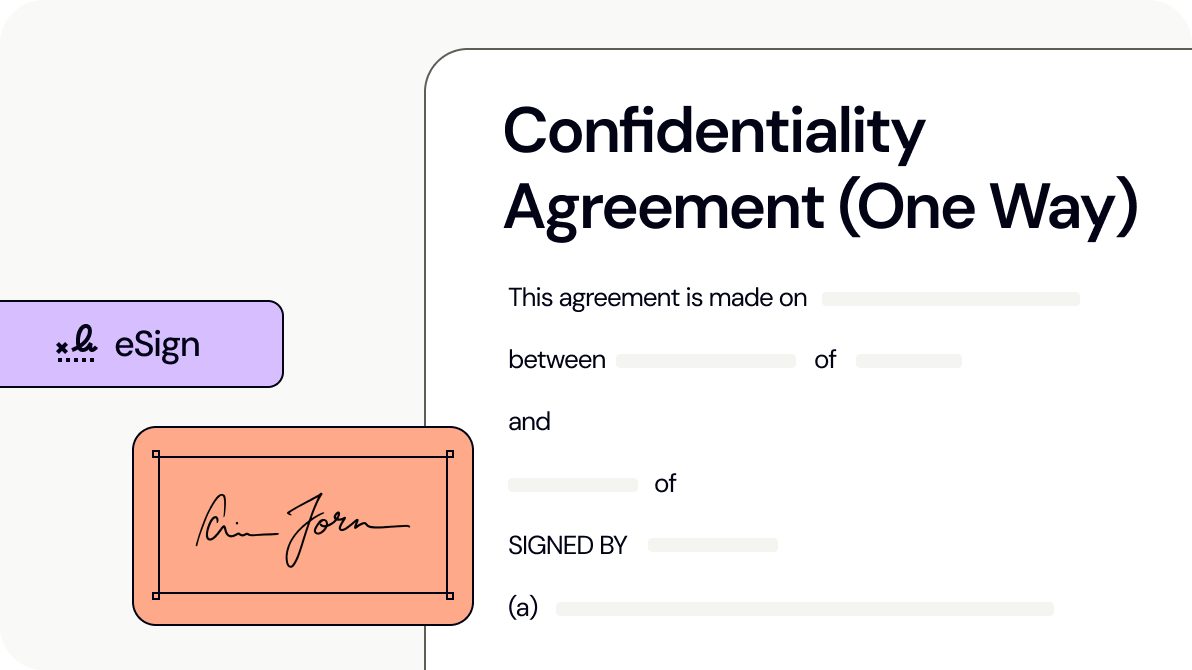
Confidentiality Agreement (One Way)

This Confidentiality Agreement (One Way), is a legal document that you can use to disclose confidential information to another party, while protecting either party from distributing that information to any other person or entity.

calendar_month

Last updated February 24, 2025

flag

Suitable for Australia

Confidentiality Agreement (One Way)
legal documents graphic

Browse our 500+ legal documents

Manage documents, agreements and a lot more from one central place. Just log in and find everything ready to go.

legal documents graphic

Collaborate with e-Sign and Sharing

Having access to your legal documents has never been easier. You can request e-signature, share the document and download for an efficient collaboration.

legal documents graphic

Instantly review any legal document

Upload your document, ask contract AI, and watch those burning questions transform into crystal-clear answers. Because brilliant decisions shouldn't keep you waiting.

docs

Create unlimited legal documents and eSignatures for only $39/month.

Upgrade to a Lawpath legal plan to boost your new business.

View plans & pricing

How to create a legal document

  • check_circle

    Access the Document Library

  • check_circle

    Select the template that matches your needs

  • check_circle

    Customise by adding or removing clauses with assistance from Lawpath AI

  • check_circle

    Personalise with your headers, footers, logos, or additional text

  • check_circle

    Store all documents securely in your account for easy access

Start creating your first document

Frequently asked questions

Use this Confidentiality Agreement (One Way) if:

  • You would like to disclose confidential information
  • You would like to stop confidential information from falling into the wrong hands; and
  • You would like to protect the confidential information of one party.

What does the Confidentiality Agreement (One Way) cover?

  • A description of the confidential information;
  • Confidential rights and obligations of the parties;
  • Protection of sensitive information;
  • Return of confidential information at the end of the agreement;
  • Obligations regarding proper use of the information; and
  • Circumstances where disclosure is permitted.

What happens if a Confidentiality Agreement is breached?

When the time of disclosure is during the time period specified before the termination of this agreement. If both parties have expressed consent prior through signature, the agreement is a binding legal contract that outlines a confidential relationship between the vendor/suppliers and the other party. Therefore, when a breach or violation occurs, you are able to claim rights in dispute against the violating disclosing party. These rights are outlined in the provisions of this agreement - some specifications include; an injunction, damage for loss, court order. The most commonly found right is if an employee breaches an agreement with a business/business owner then the employee can be immediately terminated.

What type of information can be covered in a Confidentiality Agreement?

Subject matter in the entire agreement is broad and can be customised to your needs. Common information that can be covered is inclusive of but not exhaustive to; patents, copyrights, financial information, customer lists, trade secrets. You can use this Lawpath template as a base and then customise the document accordingly.

How long is a Confidentiality Agreement effective for?

It is not an essential element of a confidentiality agreement to impose a specific time-frame. It is recommended that your document should not contain a time-frame and that an obligation of confidentiality remain until the information is no longer classified as confidential and enters the public domain. In cases where the parties decide to agree on a time-limit, to ensure enforceability, the deadline must not go over what is reasonably necessary to protect the legitimate interests of your business.

Will my Confidentiality Agreement be enforceable overseas?

Like many contracts, this document is only enforceable in the country or state specified in the agreement. Similarly, this document is governed by the law/s in the respective country or state it is executed in. If you intend to take legal action to enforce this agreement or seek remedies for its breach, you will need to do so in the State or Territory Court the document was executed in. 

Should I ask my employees and interns to sign a Confidentiality Agreement?

One of the most common forms of confidentiality agreements exists between an employer and employee. Confidentiality agreements are beneficial in the context of employment because they allow for a free-flow of confidential information within the workplace to maximise business productivity, while at the same time prohibiting employees from using or disclosing confidential information. Employment agreements also often include a binding confidentiality clause.

Who else should sign a Confidentiality Agreement?

Clients

When engaging with clients or potential clients, a business or entity may have the clients sign a confidentiality agreement when sensitive information is disclosed.

Vendors

A business that relies on third-party vendors who may have access their confidential information should get the vendor to sign a confidentiality agreement during their business relationship to ensure their information is protected.

Contractors

Having an independent contractor sign a confidentiality agreement where they may have access to confidential information during their employment, would prevent the contractor from acting on the information and protect the contracting entity.

Investors

Investors may be asked to sign a confidentiality agreement when commercially sensitive information is shared between the parties to ensure the information does not go public, and the information is protected.

What happens if the terms of a Confidentiality Agreement are broken?

A confidentiality agreement sets out the rights of a party in the event of a breach by the other party. These rights may include:

  • Obtaining an injunction in the event of an anticipatory breach (to prevent information from being released).
  • Monetary compensation (damages) where a breach has already occurred.

Other names for this document include:

  • NDA;
  • Non-Disclosure Agreement;
  • Confidential Disclosure Agreement (CDA);
  • Proprietary Information Agreement (PIA);
  • Secrecy Agreement (SA);
  • Confidentiality Contract; and
  • Gag Order.

Other documents you may need:

Further information

View Sample Confidentiality Agreement (One Way)
Confidentiality Agreement (One Way)
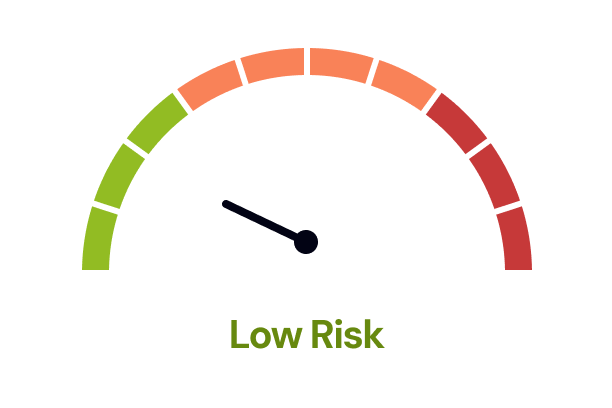
risk level indicator at Low level

The Legal Risk Score of a Confidentiality Agreement (One Way) Template is Low

Our legal team have marked this document as low risk considering:

  • One risk involves the potential for unauthorized disclosure or misuse of confidential information, which could lead to significant losses or damages for the Disclosing Party.
  • Another risk is the ambiguity around what constitutes "public domain," which could lead to disagreements and potential breaches if the Recipient Party misinterprets the confidentiality status of certain information.
  • There is also a risk that the Recipient Party may face substantial financial burden if found in breach of the agreement due to the requirement to cover all costs and expenses related to enforcing the agreement.

Articles about Confidentiality Agreement (One Way)

Should You Use A Mutual or One-Way NDA? (2025 Update)
By Justin Pasqualino|Jan 8, 2025

Should You Use A Mutual or One-Way NDA? (2025 Update)

As a business owner, it's important to protect your confidential information in every context. Find out the difference between one way and mutual NDAs here.

3 Things to Do After Completing Your NDA (One-Way)
By Jackie Olling|Sep 4, 2020

3 Things to Do After Completing Your NDA (One-Way)

Recently completed a one-way NDA document? Find out the next steps to make sure your business's information is protected.

Top 5 Enforceability Issues For NDAs
By Justin Pasqualino|Nov 19, 2018

Top 5 Enforceability Issues For NDAs

There are many instances where an NDA won't be enforced - here's how to make sure it holds up.

What to Do If NDA Information Is Breached
By Justin Pasqualino|Nov 21, 2025

What to Do If NDA Information Is Breached

Signing an NDA means that you're obliged not to disclose any sensitive information, but what if you breach an NDA and it's not exactly your fault?

How to Maintain Confidentiality in the Workplace
By Mai Sarkissian|May 27, 2024

How to Maintain Confidentiality in the Workplace

Maintaining confidentiality in the workplace is important. Read on to learn how to protect your businesses confidential information.

What Is a Breach of Confidence?
By Tom Willis|Mar 11, 2019

What Is a Breach of Confidence?

Do you believe an ex-employee has disclosed confidential information? Do you want to know what can be done? Read this article to find out.

6 Ways Your Business Can Protect Its Trade Secrets
By Justin Pasqualino|Dec 7, 2018

6 Ways Your Business Can Protect Its Trade Secrets

Find out how to protect your Trade Secrets here.

How to Define Confidential Information in NDAs
By Jakub Grzybowski|Nov 21, 2025

How to Define Confidential Information in NDAs

Defining NDA Confidential Information correctly. Here's why it's important.

What Is the Difference Between Privacy and Confidentiality in Australia?
By Angela Omari|May 23, 2024

What Is the Difference Between Privacy and Confidentiality in Australia?

Privacy and confidentiality? Ever been confused about what they mean. Read a detailed explanation in our latest post.

Looking for more documents?

Privacy Policy

A Privacy Policy outlines how your business will use, store and collect your customers' information. A Privacy Policy is required by law in certain circumstances.

Get document

Loan Agreement

This Loan Agreement can be used by lender when offering a loan to a Borrower.

Get document

Non-Disclosure Agreement (Mutual)

A Non-Disclosure Agreement (Mutual) allows you and another party to share confidential information while legally forbidding either party from disclosing that information to any other person or entity.

Get document

Will

A Will is an essential document as part of your estate plan. This Will cannot be e-signed.

Get document

Non-Disclosure Agreement (One Way)

A Non-Disclosure Agreement (One Way) allows you and another party to share confidential information while legally forbidding the other party from disclosing that information to any other person or entity.

Get document

Website Terms and Conditions of Use (Services)

This Website Terms and Conditions of Use (Services) document is specifically tailored for websites selling services.

Get document

Business Sale Agreement

A Business Sale Agreement is used to clearly set out all relevant terms of the sale when selling or buying a business.

Get document

Contractor Agreement (Individual)

The Contractor Agreement (Individual) allows you to hire a contractor that is an individual (ie. not a company).

Get document

Browse all legal documents